
Flower vs zombie: City Defense
EVER PROFIT INDUSTRIAL LIMITEDStrategy
3.7240.00 Reviews
- Version
- 1.0.20
- Installs
- 1.00M
- Age Rating
- Everyone
Screenshots
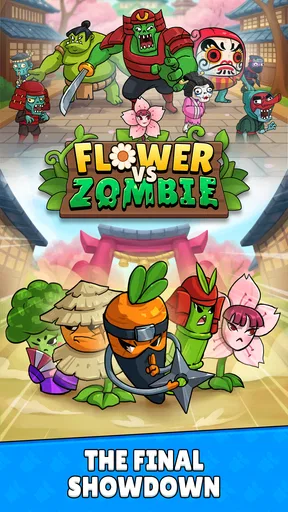
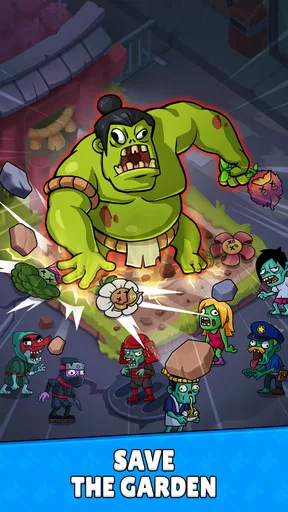
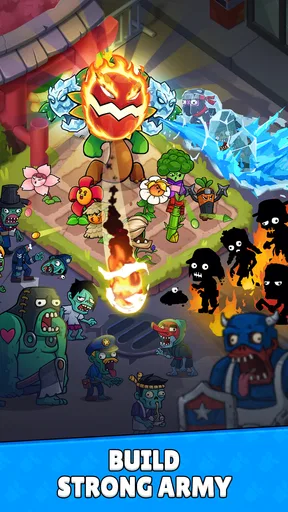
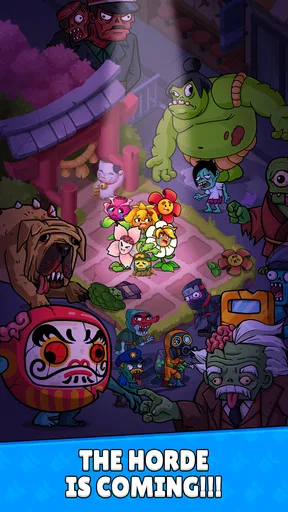
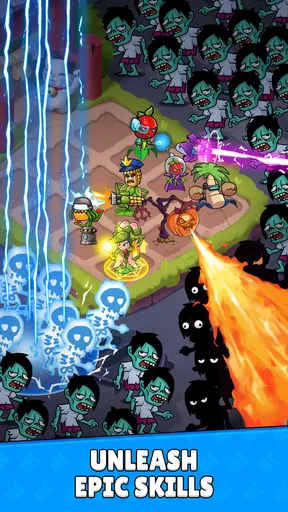
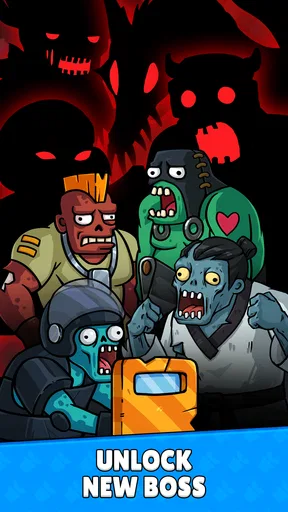

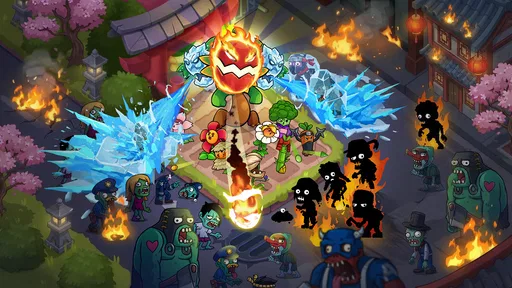
Our Review of Flower vs zombie: City Defense
 Analysis by Appyee
I spent time with Flower vs zombie: City Defense, a free strategy game built around a simple but appealing idea: combine flowers and hold back repeated zombie attacks. It is easy to understand within moments, yet the better experience comes from deciding when to merge, where to spend attention, and how much risk to accept before the next wave reaches your defenses.
The concept immediately reminded me of the familiar lane-defense tradition, but this game puts merging at the center rather than treating it as a small side action. That changes the rhythm. I was not only watching for enemies; I was also thinking about whether a flower should be combined now for a stronger defender or kept in place because the current arrangement was already covering an important threat.
That tension is what makes the game worth considering. It is not a demanding strategy simulation, and it does not try to be one. Instead, it offers short, approachable decisions that gradually become more meaningful when several threats arrive together. For players who enjoy casual planning with a defensive theme, it has a clear identity. For anyone looking for deep competitive strategy or a large tactical campaign, the limits become noticeable fairly quickly.
How the flower-merging decisions shape each defense
The central decision is not simply “merge whenever possible.” A stronger flower can be useful, but combining pieces also changes the shape of your defense. In my experience, the most sensible move was often to pause and look at the whole field before making an upgrade. A merge that improves one position may leave another approach less prepared, especially when the next attack is already developing.
This creates a useful planning horizon. I found myself making choices on three levels: what needs help immediately, what should be improved before the next wave, and which available pieces are better saved for a later emergency. The game remains accessible because these decisions are easy to read, but they still give each round a little structure beyond tapping the first available combination.
The best habit is to avoid treating every merge as progress. Sometimes the board is stable enough that holding resources is safer. Sometimes a modest improvement in the right location matters more than creating the strongest possible flower in the wrong place. That distinction is one of the game’s more interesting lessons, and it is also where the strategy feels less automatic than the bright presentation may suggest.
I also recommend checking the defensive layout after every meaningful change instead of focusing only on the flower that was upgraded. A merge can make the board look better while quietly creating a gap in coverage. This is a small but practical way to play more consistently: think in terms of the entire defense, not just the most impressive individual unit.
Why timing matters more than fast tapping
The game can look like a quick reaction title, but I did better when I slowed down. Rushing to combine flowers may produce visible progress, yet it can remove flexibility. Keeping a few useful options available gives you more ways to respond when the pressure changes. That is especially important for players who tend to spend every resource immediately.
A good routine is to identify the most vulnerable part of the defense first, then decide whether a merge actually solves that problem. If it does not, waiting may be the more strategic action. This is a simple rule, but it prevents the common mistake of upgrading for appearance rather than purpose.
There is also a difference between preparing for the current wave and preparing for the next one. If the present attack is almost under control, using everything to finish it may leave the following phase uncomfortable. I preferred making a smaller correction when possible and keeping enough flexibility to adapt afterward. That approach makes the game feel calmer and gives planning a greater role than pure speed.
Risk and reward when the board is under pressure
Every merge carries a trade-off between immediate strength and future options. The reward is obvious: a more capable flower can make the current defense safer. The risk is less obvious but just as important: fewer separate pieces can mean fewer positions covered, and a tidy-looking board is not automatically a secure one.
This is where the game’s casual strategy works best. The choices are not overloaded with complicated statistics, but they still ask me to judge timing. If the attack is mild, I can afford to prepare. If several threats are pressing at once, I may need the direct benefit of an upgrade even if the long-term arrangement is not ideal.
I would describe the risk system as forgiving enough for newcomers but meaningful enough to reward attention. A player who merges randomly may still enjoy the early flow, while someone who watches the whole field can make more deliberate decisions. The difference is not hidden behind complicated controls; it comes from understanding that every action changes what will be available next.
One practical tip is to avoid making a large chain of decisions without checking the result after each one. When several possible merges appear, it is tempting to clear them quickly. I found that this reduced my ability to notice where the defense was actually weak. A slower sequence—inspect, merge, reassess—made the outcome more predictable and reduced avoidable mistakes.
Adapting instead of repeating one favorite pattern
A fixed opening can be comfortable, but it is not always reliable. The game is more enjoyable when I respond to the pressure in front of me rather than forcing the same arrangement every time. If one side becomes the obvious problem, I need to prioritize that side. If the threats are distributed more evenly, a balanced improvement usually makes more sense than overcommitting to one location.
This is also why I would not recommend playing while barely looking at the screen. The controls are approachable, but the important information is visual and positional. The game rewards noticing what is changing, not merely repeating a familiar sequence of taps.
Adaptation matters for another reason: a strategy that works while the board is comfortable may become dangerous when the attack accelerates. I learned to treat early stability as preparation rather than proof that the current setup was perfect. That mindset helps prevent overconfidence and keeps the focus on what the next wave might demand.
Players who enjoy experimenting can use each attempt to test one adjustment at a time. For example, instead of changing the entire approach, try delaying one merge or strengthening a different area first. This makes it easier to understand which decision improved the result. It also turns failed attempts into useful information rather than simple frustration.
What keeps the strategy interesting over time
The game’s long-term appeal depends less on a dramatic learning curve and more on whether you enjoy refining small decisions. I liked the feeling of improving through better timing and awareness, but I also noticed that the basic loop can become familiar. Once the novelty of merging flowers and stopping zombies settles, the experience needs your own willingness to optimize rather than relying only on surprise.
That makes it a good fit for short sessions. I can open it when I want a focused break, make a few defensive choices, and stop without committing to a long story or a complex management system. It also works for players who like seeing whether a slightly different arrangement produces a cleaner result.
On the other hand, anyone who needs constant new mechanics, extensive narrative, or highly varied strategic systems may find the loop too narrow. The game’s strength is its clarity, and clarity can also mean fewer layers to uncover. I would approach it as a compact casual strategy experience, not as a replacement for a large tower-defense game or a deep tactics title.
The version I reviewed is 1.0.20, and the game is available for Android devices running at least Android 7.0. It is free to start, with in-app purchases ranging from $0.99 to $47.99 per item. That pricing range is worth keeping in mind even if you intend to play without spending. The right question is whether the free loop feels satisfying on its own, because players who dislike purchase prompts or progression pressure may prefer a fully paid alternative with fewer monetization considerations.
The age rating is Everyone, which matches the straightforward presentation and accessible premise. I would still judge it mainly by your tolerance for repeated defensive sessions rather than by the theme. The zombie setting is presented as a light game framework, while the real focus is arranging and merging flowers under pressure.
Who will enjoy it, and who should choose something else
I would recommend this game to someone who likes casual strategy, visual planning, and short rounds that do not require a long tutorial. It is particularly suitable for players who enjoy the satisfaction of combining pieces but want more purpose than a purely decorative merge game. The defensive objective gives each action a reason, and the incoming attacks create a natural deadline for decisions.
A realistic everyday use case is a short commute or a few minutes between tasks. I could play a session while taking a break, focus on arranging the defense, and put the game down without needing to remember a complicated story. It also suits someone who wants a low-friction introduction to planning games, because the basic idea is immediately understandable.
I would be more cautious recommending it to players who want precise control over every unit, detailed enemy information, or a highly developed strategic meta. The game’s appeal comes from broad, readable choices. If you prefer elaborate skill trees, long-term team building, or multiplayer competition, a more specialized strategy game will probably offer more depth.
It is also not the best choice for someone who dislikes repetition. The core pleasure comes from improving how you handle similar defensive situations, so the experience depends on finding interest in refinement. If repeating a familiar loop feels dull after the first few sessions, the flower theme alone may not carry the game for you.
How it compares with familiar strategy alternatives
Compared with traditional tower-defense games, this one feels lighter and more focused on combining than on designing a large network of towers. A conventional tower-defense title may give you more explicit placement choices, upgrade paths, and enemy-specific counters. Here, the appeal is the compact decision of when and where to merge while keeping the defense intact.
Compared with pure merge games, the zombie attacks add urgency. You are not combining flowers only to watch numbers grow; you are doing it because the board has a defensive job to perform. That makes each upgrade more meaningful, although it also means relaxed players may occasionally feel pushed to act before they have arranged everything perfectly.
Compared with turn-based tactics games, the experience is easier to enter but less analytical. There is no need to study a large battlefield for a long time before every move. The trade-off is that players who enjoy elaborate positioning puzzles may find the available decision space narrower. I see this as a game for accessible planning, not a miniature version of a full tactics campaign.
The most important comparison is therefore about commitment. Choose this game when you want a quick merge-and-defend loop with understandable pressure. Choose a larger strategy title when you want deeper systems, broader experimentation, or a longer-term campaign structure. Neither style is automatically better; they serve different moods.
What the player numbers suggest about its place
The game has passed one million installs and holds a 3.7 average from roughly eleven thousand ratings, alongside about 240 written reviews. Those figures suggest a recognizable audience, but they also fit my impression that the game will divide players according to how much repetition and simplicity they enjoy.
Its developer, EVER PROFIT INDUSTRIAL LIMITED, has positioned the experience around a direct flower-versus-zombie premise rather than an elaborate genre hybrid. That focus is helpful: I always know what the next decision is about. At the same time, the focused design means the game has less room to hide weaknesses. If the central merge-and-defense loop does not appeal to you, there are not many unrelated systems to compensate.
I would not judge it solely by the average rating. The more useful question is whether you want a casual strategy game that rewards small improvements. If yes, the rating feels understandable. If your expectations are closer to a premium strategy production, the same simplicity may feel limiting.
My strategy verdict after playing
Flower vs zombie: City Defense is an approachable strategy game with a clear loop and a surprisingly useful lesson about timing. Its best moments come from resisting automatic merges, protecting the whole board, and choosing between an immediate upgrade and a stronger position later. Those decisions are modest in scale, but they give the game more thought than its simple premise initially suggests.
I especially liked that the game can serve two kinds of players. Beginners can enjoy the satisfying act of combining flowers and stopping attacks without studying complicated rules. More attentive players can improve by managing risk, preserving options, and adapting their setup instead of repeating one pattern. That is a good balance for a free casual title.
The limitations are just as clear. The core loop may become repetitive, the strategic space is smaller than in a full tower-defense or tactics game, and the in-app purchase range means budget-conscious players should decide early whether the free experience meets their needs. I would skip it if you want a rich campaign, competitive depth, or a completely different structure from one session to the next.
For everyone else, I think it is worth trying. Go in expecting a focused merge-and-defend game rather than a deep strategy epic. Watch the entire defense, do not spend every option immediately, and treat each wave as a planning problem rather than a tapping race. With that mindset, this game becomes a pleasant, easy-to-pick-up strategy break—and one that rewards a little more thought than its cheerful flowers first suggest.
Verdict
Strengths of Flower vs zombie: City Defense
- Simple controls make it easy for new players to start.
- Short battles fit well into quick gaming sessions.
- Different plant and zombie abilities add tactical variety.
- Bright cartoon visuals are suitable for a wide audience.
- Offline play is useful when an internet connection is unavailable.
Limitations of Flower vs zombie: City Defense
- Difficulty can increase sharply in later stages.
- Repeated battles may feel predictable after extended play.
- Some upgrades may require considerable time to unlock.
- The interface can feel crowded on smaller phone screens.
- Ads or optional purchases may interrupt the overall experience.
Other Releases by EVER PROFIT INDUSTRIAL LIMITED
View All
Cooking Japan: Restaurant Game
Adventure4.5

Anime Shimeji, Pet On Screen
Personalization0.0
Similar Picks in This Category
View All
Clash of Clans
Supercell4.5

Plants vs. Zombies™
ELECTRONIC ARTS3.7

Lords Mobile: Kingdom Wars
IGG.COM4.5

Clash Royale
Supercell4.4

State.io — Conquer the World
CASUAL AZUR GAMES4.1

Car Driving School : Car Games
Spark Game Studios3.9
Frequently Asked Questions
What is Flower vs Zombie: City Defense about?
Flower vs Zombie: City Defense is a casual strategy and tower-defense game in which you place defensive flowers around a city to stop waves of approaching zombies. Each plant has different abilities, attack ranges, and strengths, so success depends on choosing the right units and positioning them carefully. The game combines simple controls with progressively more demanding stages.
Is Flower vs Zombie: City Defense free to download and play?
The game can generally be downloaded without an upfront purchase, allowing players to try its core levels and mechanics for free. However, availability of advertisements, optional in-app purchases, extra resources, or premium items may vary depending on the version and platform. Before downloading, check the store listing for current pricing, purchases, and any subscription-related information.
Does Flower vs Zombie: City Defense require an internet connection?
Many tower-defense games of this type allow the main campaign to be played offline after installation, which is useful when traveling or when mobile data is limited. Nevertheless, an internet connection may be required for advertisements, cloud saves, updates, events, rewards, or purchases. It is best to test offline access on your device because requirements can differ between releases.
Is Flower vs Zombie: City Defense suitable for children?
The game uses cartoon-style flowers and zombies rather than realistic violence, making it more approachable for younger players than many action games. Even so, parents should review the age rating, advertising, in-app purchase options, and privacy information shown in the relevant app store. If children use the device, parental controls can help prevent accidental purchases or unsuitable advertisements.
What devices are compatible with Flower vs Zombie: City Defense?
Compatibility depends on the specific Android or iOS version available in your region. Most recent phones and tablets should handle a casual strategy game smoothly, but older devices may experience slower loading, reduced performance, or installation restrictions. Check the official store page for the required operating-system version, available storage, and developer notes before downloading to confirm that your device is supported.
Play our best games!


